Showing posts with label Book. Show all posts

October 20, 2018

HUMAN ACTS

Han Kang
The Gwangju Uprising was a bloody stepping stone on the struggling path toward democracy for South Korea. While the true number of casualties was forever occluded from history, the fictional death of a middle-school boy haunted the narratives of the novel, lamented and condemned the inhuman acts of unspeakable brutality. Some readers may find the distant, impersonal tone dominant almost throughout the novel disconcerting; however, dissociation may be the only survival method in the face of overwhelming traumas.

I noticed that the adjective “cold” appeared in the novel roughly three dozen times in all seven chapters with a multitude of connotation. The infamous uprising not only obliterated the death but also extinguished the flame of survivors’ hope for personal justice in the aftermath. The numbing effect therefore doomed the ones left behind with a lifetime of picking up the broken pieces of their shattered and perpetually tormented souls by the curse of memories and debilitating grief.

Have you heard about the Milgram experiment in which people abandoned their personal conscience to blindly obey authority? This chilling trait of human nature was responsible for recurring horrific crimes against humanity throughout our brief chronicle of mankind. Blessed be the heart of the courageous ones who choose to stand on the right-side history in opposition of mass obedience for oppression.

October 7, 2018

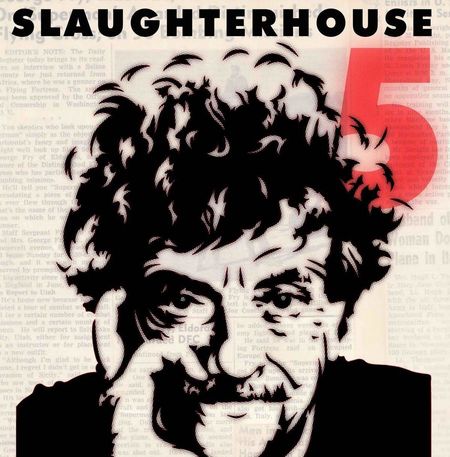
SLAUGHTERHOUSE FIVE

Kurt Vonnegut
A near-dead person has the alleged ability to review the entirety of his life as he advances toward that blinding tunnel of light. This novel was the jumbled life assessment of somebody suffered from severe PTSD and traumatic brain injuries. Billy Pilgrim may think he traveled through time, but he may just as well flash back and forth within his own memory during the nano-second right before his death. Much like Dr. Crowe in the movie The Sixth Sense, Billy's version of reality made sense only to him in order to cope with horrific events in his life.

 As a reader, I love to tip-toe on the literary fence that any author planted between their land of fantasy and reality. I can choose to lean on the paradox of fourth-dimension venture of the Trafamadorian aliens or I can choose to blame Billy's experience on those cheap Kilgore Trout science fictions he read. This unambiguity underscored the religious argument of fate and free-will that Billy vigorously debated with the aliens. 

I like certain pieces and bits of this novel; I get the sentiments on war. the absurdity of death, and all the originality with which it was written. However, the fragmented novelty of it escaped my enjoyment and rendered me unable to read it the wholesome synthesizing way that the Trafamadorians read their novels. So it goes.

October 1, 2018

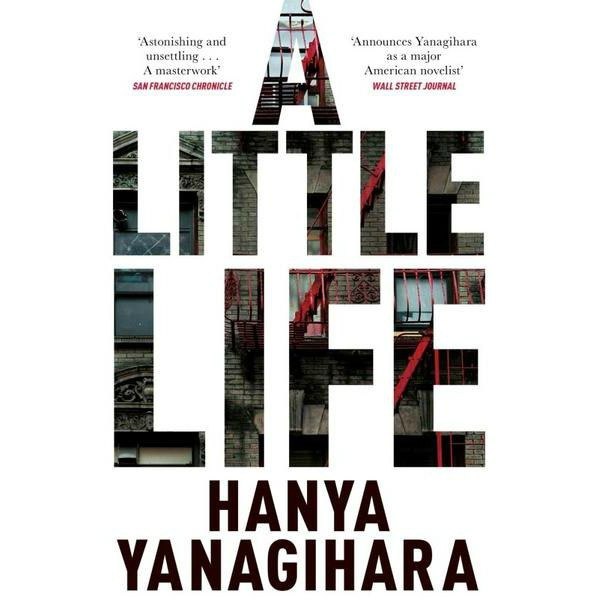
A LITTLE LIFE

Hanya Yanagihara
I could not handle the intense viscero-somatic reaction elicited from this harrowingly depressing novel. All suffering was blown up to a cosmic proportion, everything on a brighter side was permanently tainted with the sickest shade of abuse, loathing, and self-destruction. Extremism shoved this novel forward: everybody was either the perverted devil incarnation himself or Mother Teresa with a perpetual savior-complex and the holy patience of a thousand gods. The folks who did not fully fit those categories scrambled around in absolute bewilderment of whatever the bloody hell happened to Jude, the main character, whom was such a malignant magnet for evil that thoroughly nullified even the most restorative forces of love.

 I made the mistake of choosing this book for my bedtime reading, which repeatedly jolted me wide awake with damning disbelief and a distressing need to stand under a hot shower scrubbing myself vigorously with antiseptic soaps for hours. Hanya Yanagihara was a true voyeuristic sadist who masterfully juxtaposed elegance and depravity in her plot and characterization. However, dooming the folks having same sex relations is rather exploitative, no? Additionally, I can empathize with the needs to fix the damaged souls, but I also wanted to scream at a lot of people in this book that they ain’t no miracle workers, so please, let nature run its inevitable course.

September 27, 2018

CALL ME BY YOUR NAME

André Aciman
"We belonged to each other, but had lived so far apart that we belonged to others now."

AVietnamese poet once wrote that "Life is beautiful only when love is unfinished." The love story in this book was beautifully unfinished in the sense that it never ended. Although Anciman unfolded Elio's coming of age with lavishing intensity, Elio was more than just a virile 17-year-old and Oliver was more than just a teenaged wet dream. The few weeks they spent together decorated their lives with colorful passion and enriched their souls even if they were never meant to be together.

One could quickly dismiss the affair as a summer fling fueled with the sultry sun and scenic landscapes of coastal Italy. Certainly, any perceivable barrier could dampen the most fiery of passion, blur the most vivid of memories, and condemn all romantic sentiments to melancholic razbliuto. The lasting spell of love cast on the two men in this book bridged the chasm of time and distance with its transformative power of becoming erotic, empathetic, platonic, or unconditional.

 To escape the lonely darkness, how would you choose to live? A fleeting minute of radiance or a lifetime of dimness? Elio was suggestively blinded by the past and wandering on in a twilight. However, as punishing as time and distance could be, they allowed the luminosity of his past to guide him onward with peace and a touch of healthy longing. Oliver was his first true love after all


September 25, 2018

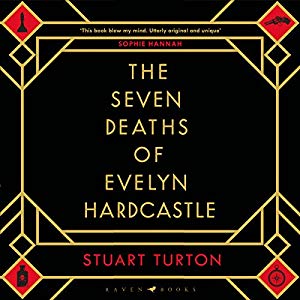
THE 7½ DEATHS OF EVELYN HARDCASTLE

Stuart Turton
Oh boy, Evelyn's murder was quite a theatrical spectacle complete with champagne, a band, and fireworks. What devil trickery of a mind came up with this idea amidst frenemies and merry-making?

Poisoning the bleak landscape of Blackheath manor was another murder exactly 19 years prior. The isolated gothic gloominess served as a perdition that spawned a deluge of dirty secrets, impending deaths, and a plethora of blackmailing materials to keep everybody's panties knotted into a desperate bunch of nervous perspiration. Nobody was reliable, and everybody was his or her worst enemy only secondary to a lurking serial killer and cunning competitor(s) to push the suspense of this twisted who-done-it over the edge .

 The multiple perspectives, twists, and turns commanded my undivided attention and kept me guessing the whole time. The concept was reminiscent of certain episodes of the science fiction anthology television series Black Mirror in its what-the-bloody-hell-just-happened factors; the execution was neatly planned, smartly intricate, curiously teasing with enough red-herrings to feel smart guessing, and somehow ended up a strangely cathartic tale of forgiveness and redemption. 

What a thrilling experience it was!

August 21, 2012

MURAKAMI - HEAR THE WIND SING - AN EXCERPT

Mars the Planet
"This story is about the countless bottomless wells dug into the surface of Mars and the young man who climbed down into one. These wells were dug by the Martians tens of thousands of years ago, and that’s well-known, but the strange thing is that all of them, and I mean all of them, were dug so they wouldn’t strike water. So the question of why the hell they bothered to dig them is something nobody knew. As for the Martians themselves, aside from these wells, there wasn’t a trace of them left. Their written language, their dwellings, their plates and bowls, metallic infrastructure, their graves, their rockets, their vending machines, even their shells, there was absolutely nothing left. Just those wells. And the Earthlings had a hell of a time deciding whether or not you could even call that civilization, but those wells were definitely really well made, and all those tens of thousands of years later there wasn’t even so much as a single brick of a ruin

September 11, 2011

Rohinton Mistry - A Fine Balance

A Fine Balance
My friend Cora decided to cease her ownership of the book and gave it to me after an abysmal Sociology lecture about the caste system. "Ugh...take it, I can't have it, it's too depressing for me, I just can't..." she then wandered off complaining about how much she hated the professor and sociology in general. Holding the book in my hand, I realized she quit after about one third into the book. I wondered what it was that set off such a vehement rejection. Was it because the book belongs to Oprah's book club and Cora was being a hater of anything mainstream? Obviously, I had no idea what was in store for me in those 600 pages.

The book depicts how destiny brings four people of very different background into each other's life. Set in the time of political and social chaos, the novel weaves the life fibers of Dina, a widow of wealthy background to those of Maneck, a young student, and Ishvar and his nephew Omprakash, two tailors who work for Dina's secret sewing shop for an export clothing company. I guess I won't present a synopsis of the novel as you can find that easily on Wikipedia. I'm more interested in telling you why Cora abandoned it in the first place.

June 1, 2011

The Double Life of Veronique

Technical details of this Kieslowski movie can be found at the IMDB website. Every frame is a picturesque feast to the eyes with an ethereal score composed by Preisner. This is one of those movies that stay in your mind long after that speechless awe you experience the first time you watch it. I watched it twice and each time I gain some refreshing perspective not only about the movie itself but also about life. What would you do if you are to have a second chance in your life?

How about a bit of that glorious opening sequence to get you in the mood?


I particularly love the green color filter used throughout the film. You can crack out many meanings associated with such a color choice, of which Kieslowski was the master. Check out his The Three Colors: Trilogy, also my favorite, and I'm thinking about writing about them sometimes in the future. At the mean time, I'm watching his Decalogue and it is a religious experience for me.

Well, enough rambling about Mr. K's other gems, now I can go on and on about how much I love Irene Jacob, ever since I first saw her in Red. The camera simply loves her and she did quite a good job portraying the Polish Weronika and the French Veronique, two similar yet profoundly different human experiences that one can live. Having heart problem, Weronika drops dead pursuing her dream while Veronique sacrifices her career to preserve her life. Weronika lives more fiercely while Veronique appears more reserved and contemplative. Having an allegedly better Veronique-self, the Weronika confirms to her father that she is not alone in this world. Mysteriously affected by Weronika's death, Veronique suddenly cries during her love-making as dirt is thrown upon Weronika's coffin.

When I was younger, I had this irrational fear upon knowing about the "antimatter." Supposedly, the antimatter is to nullify the existence of matter. To elaborate, if you happen to see yourself walking from the opposite direction toward you, it is certain that you are to vanish from the Earth. I smile uncomfortably as Weronika sees her Veronique self on the bus during the demonstration. Which one survives, we all know by now. The difference is that there is no complete disappearance, the better entity persists. The encounter can be seen below:


While Weronika collapses on stage and dies, Veronique quits her singing career to work as a modest music instructor and takes care of her health. In real life, you don't get to have a second chance to start all over again very often. You don't simply drop dead in order to live again, restarting a new self full of knowledge and appreciation of your life. All you get is this one chance, so the least you could do is to be conscious of your choice and take responsibility for all the decisions you make. If you could do so, you would feel a sense of powerful self-control that hopefully gives you enough strength to resurrect on your own if you happen to die in any aspect of your life. Talking about control, the movie proposes quite depressing and hopeless a viewpoint on the extent that one can control his life. The following scene proposes the most important philosophy behind every gorgeous frame of the movie:


That's right, y'all. There is no free will. You can do what you want, thinking you have the control over what you do and such but hell no, you are all but mindless marionettes controlled by invisible strings of an ever-powerful yet secretive puppeteer knowing all of your actions, thoughts, and consequences. Indeed, Weronika is orchestrated by the old conductor during her hauntingly fatal performance. Veronique runs around looking for her lover - the puppeteer/writer who plots her every single move. She never realizes how much she is being controlled till the moment her lover carves out her two wooden marionettes and tells her about the storyline of his book:
"...November 23, 1966 was the most important day of their lives. That day, at three in the morning, they were both born in two different cities, on two different continents. They both had dark hair and brownish-green eyes. When they were both two years old and already knew how to walk, one of them burned her hand on a stove. A few days later,the other one reached out to touch the stove but pulled away just in time. And yet, she could not have known that she was about to burn herself..."
I will leave Veronique's reaction upon such realization for you to find out. I've spoiled quite a good deal of the movie to you, my apology. Now what you have to do is to experience the magic for your self. Your watching or not has already been decided already. Whatever you do has already been planned out. However, you can still retrieve a meaning to your own existence and living in this world: just by knowing how uncontrolled you are have already given you so much power already. It doesn't mean that you will let things slide under the table and hide under your blanket withdrawing from everything; your action is also what the puppeteer wants. The consequence of your action, the outcome of whatever plan is in your hand despite the plan itself being established by the puppeteer. Give it a try, don't be afraid. 

Even if you have to drop dead like Veronika, your responsible choice will give you strength and knowledge to resurrect. Don't you feel like you've become a better, stronger, and wiser person every time you recover from certain life's downfall? If you do, count me in.

There are certain aspects of the movie that reminds me of Jostein Gaarder's Sophie's World. Take a look!

The next time you drop dead, remember, it's not the end. Just like this:

Apycom jQuery Menus